ORGANS OF PARIS © 2026 Vincent Hildebrandt HOME ALL ORGANS



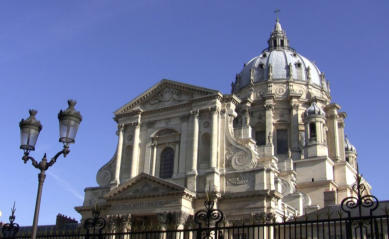
The Val-de-Grâce is a former abbey, now used as a
military hospital. On 1 April 1645, Anne of Austria
and Louis XIV (then aged seven) laid the
foundation stone of the abbey church of Val-de-
Grâce, which had been founded twenty years
earlier and was designed by François Mansart and
Jacques Lemercier. It is probably the finest
example of Baroque architecture in Paris. In doing
so, the Queen Mother fulfilled a vow she had made
earlier, giving thanks to God for the birth of a son.
Construction was interrupted for a time due to her
fall from favour, but resumed in 1655, and the
church was completed in 1665. The abbey was
closed during the French Revolution and became
the Val-de-Grâce military teaching hospital. The
church itself was used for a time as a storage
space for clothing and supplies for military
hospitals, before being restored in 1818–1819 and
returned to worship in 1826. It is now attached to
the Diocese of the French Armed Forces.
The former Benedictine abbey buildings, adjoining
the church, now house the Museum of the French
Army Medical Service.

C1
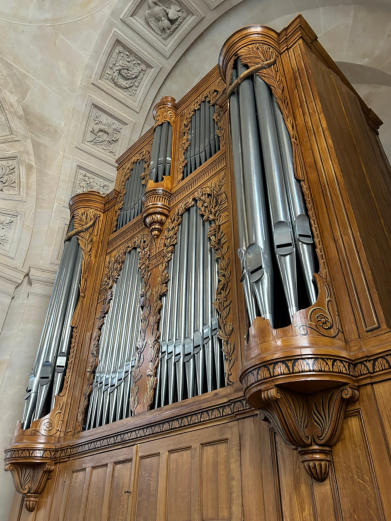
Nothing is known about the organ that stood at Val-de-Grâce
before the French Revolution—during which it was dismantled
and dispersed—except for the name of the maker of its case,
Germain Pilon, who also built the case of Saint-Louis des
Invalides. The instrument itself was taken apart and scattered
during the Revolution. According to some sources, the case was
later installed in the church of Saint-Pierre de Montmartre in
Paris.
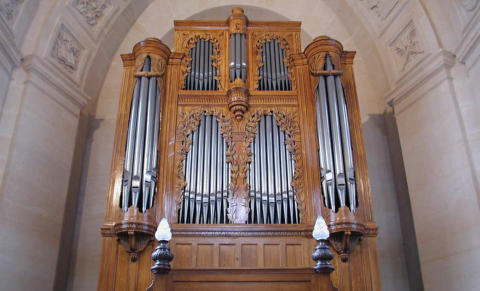
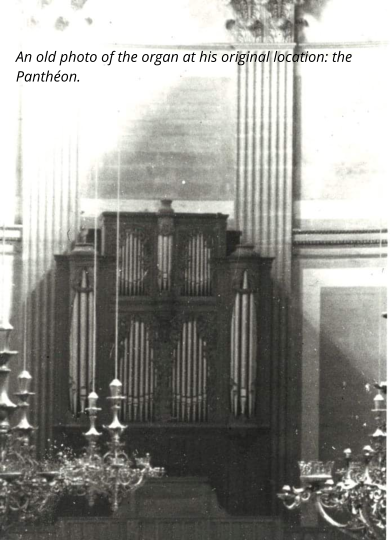
It would take more than a century before a pipe organ returned
to Val-de-Grâce. In 1853, Aristide Cavaillé-Coll installed a new
instrument in the church of Sainte-Geneviève: an 8-foot organ
with two manuals and pedal, and 20 stops. In 1885, this church
once again became the Panthéon.
In 1891, by agreement between the Ministries of War and Public
Works, the organ was assigned to the church of the Val-de-Grâce
military hospital, where it was transferred the same year by the
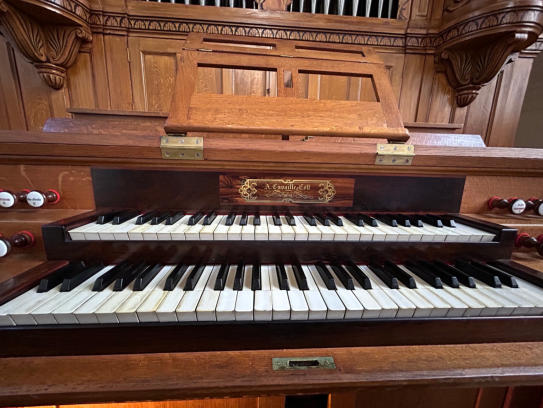
organ builder Joseph Merklin. He installed a Barker machine as
well as a new console.
In 1927, a major overhaul was carried out by the builder Paul-
Marie Koenig:
- Installation of a complete first octave for the Récit stops (which
had previously begun only at C2), and extension of the upper
range of the pedal stops (which had ended at F2).
- On the Grand Orgue: the 4' Gambe was replaced by a 2 2/3'
Quint, and the 4' Clairon gave way to an 8' Cromorne made from
the pipes of the Récit 8' Voix Humaine (completed with 12 zinc
bass pipes).
- On the Récit: addition of an 8' Voix céleste and a 16' acoustic
Bombarde, and replacement of the 8' Bourdon with a 4'
harmonic flute.
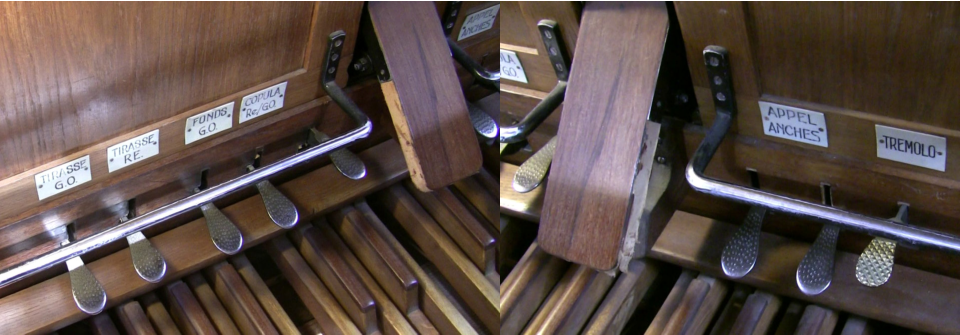
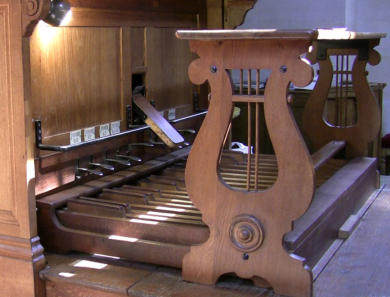
- Installation of a 30-note pedalboard, a 16' Récit/Grand Orgue
coupler, and a Récit tremulant.
In 1946, Koenig replaced the 16' acoustic Bombarde of the Récit
with a two-rank Sesquialtera. The first 30 pipes of the 16'
Bombarde were reused in the pedal, replacing the 4' Clairon.
In 1993, the instrument was restored by the organ builders
François Delangue and Bernard Hurvy, bringing back a tonal
palette close to that of Cavaillé-Coll. The extended compass of
the Récit and pedal, introduced by Koenig, was nevertheless
retained.
Site of the organ



Titular organist
??
Famous organist in the past Auguste Durand,
Clément Loret et Léon Laumonnier.
Parish website
Videos
Yannick Merlin
Photos
Organ: Hervé Désarbre (facebook)
1853 - Aristide Cavaillé-Coll (1)
1891 - Joseph Merklin (6)
1929 - J.M. Koenig (2)
1946 - J.M. Koenig (2)
1993 - François Delangue et Bernard Hurvy (4)
II/22 - mechanical traction
stoplist



Organs of Paris


ORGANS OF PARIS © 2026 Vincent Hildebrandt
C1
Nothing is known about the organ that stood at Val-de-
Grâce before the French Revolution—during which it was
dismantled and dispersed—except for the name of the
maker of its case, Germain Pilon, who also built the case
of Saint-Louis des Invalides. The instrument itself was
taken apart and scattered during the Revolution.
According to some sources, the case was later installed in
the church of Saint-Pierre de Montmartre in Paris.
It would take more than a century before a pipe organ
returned to Val-de-Grâce. In 1853, Aristide Cavaillé-Coll
installed a new instrument in the church of Sainte-
Geneviève: an 8-foot organ with two manuals and pedal,
and 20 stops. In 1885, this church once again became the
Panthéon.
In 1891, by agreement between the Ministries of War and
Public Works, the organ was assigned to the church of the
Val-de-Grâce military hospital, where it was transferred
the same year by the organ builder Joseph Merklin. He
installed a Barker machine as well as a new console.
In 1927, a major overhaul was carried out by the builder
Paul-Marie Koenig:
- Installation of a complete first octave for the Récit stops
(which had previously begun only at C2), and extension of
the upper range of the pedal stops (which had ended at
F2).
- On the Grand Orgue: the 4' Gambe was replaced by a 2
2/3' Quint, and the 4' Clairon gave way to an 8' Cromorne
made from the pipes of the Récit 8' Voix Humaine
(completed with 12 zinc bass pipes).
- On the Récit: addition of an 8' Voix céleste and a 16'
acoustic Bombarde, and replacement of the 8' Bourdon
with a 4' harmonic flute.
- Installation of a 30-note pedalboard, a 16' Récit/Grand
Orgue coupler, and a Récit tremulant.
In 1946, Koenig replaced the 16' acoustic Bombarde of the
Récit with a two-rank Sesquialtera. The first 30 pipes of
the 16' Bombarde were reused in the pedal, replacing the
4' Clairon.
In 1993, the instrument was restored by the organ
builders François Delangue and Bernard Hurvy, bringing
back a tonal palette close to that of Cavaillé-Coll. The
extended compass of the Récit and pedal, introduced by
Koenig, was nevertheless retained.
Site of the organ
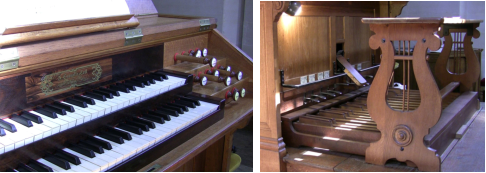
1853 - Aristide Cavaillé-Coll (1)
1891 - Joseph Merklin (6)
1929 - J.M. Koenig (2)
1946 - J.M. Koenig (2)
1993 - François Delangue et Bernard Hurvy (4)
II/22 - mechanical traction
stoplist
Titulair organist
??
Organiste célèbre ayant illustré l’instrument par le passé:
Auguste Durand, Clément Loret et Léon Laumonnier.
Parish website
Vidéos
Yannick Merlin
Photos
Buffet : Pierre Marteau