


ORGANS OF PARIS © 2026 Vincent Hildebrandt HOME ALL ORGANS




A1
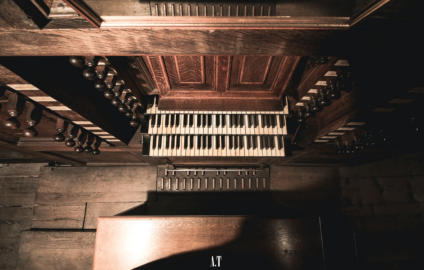
Notre Dame des Vertus houses one of the oldest organs
of France. It was built in 1630-1635 by Pierre Le Pescheur
or Valeran de Héman. It had 14 stops on the great (48
notes) and an Echo (32 notes).
In 1657, Pierre Desenclos enlarged the Echo and added a
pedal (29 notes).
At the beginning of the 19th century, the organ was
restored and enlarged with a Positif (51 notes) with 10
stops, probably by Dallery.
In the second half of the 19th century, the instrument
underwent several interventions and upgrades, but most
of the original pipes were preserved.
Before and after the second world war, Louis-Eugène
Rochesson performed a limited restoration.
In 1987, Robert Chauvin from Dax (Landes) carried out a
historical restoration, assisted by Louis Benoist and
Pierre Sarelot from Le Mans (Sarthe).
Their work aimed to restore the late-18th-century layout,
based on a careful study of the original material that was
still present. Most of the 17th‑century pipework has
survived, although it was found in great disorder and
reused in later, non-original stops. The missing stops
were rebuilt following the pattern of the remaining pipes.
The upper part of the Bombarde 16′, the Voix Humaine,
and the Hautbois all date from the late 18th century. A
short octave (without C♯) was re‑established on the
Great, along with a pitch a half‑tone below modern
concert pitch, a meantone temperament with five pure
thirds, and a French-style pedalboard with 25 keys. The
case was also restored, and the wind system—three new
wedge‑shaped bellows—was installed on the left side of
the case.
Source

Une chapelle dédiée à St Christophe et Notre-Dame
est mentionnée à cet emplacement en 1242.
Notre-Dame-des-Vertus est reconstruit à la fin du
15ème et au début du 16ème siècle. La tour carrée
de 30m de hauteur est datée de 1541. Il s’agissait
d’un campanile séparé de l’église. La nef est agrandie
entre 1616 et 1621 et la façade de style jésuite est
édifiée en 1618, rattachant ainsi la tour à l’église.



Titular organist
Lucile Dollat, Anne-Isabelle de Parcevaux, Sarah Kim,
Elise Leonard.
Videos
Adriano Spampanato
Parish website
Photos
Organ: Antoine Thialler
Church: Seine-Saint-Denis Tourisme
1635 - Pierre Le Pescheur/Valeran de Héman (1)
1800 (~) - Dallery (2)
1947 - Louis-Eugène Rochesson (6)
1987 - Robert Chauvin, Benoist & Sarelot (5)
III/30 - mechanical traction
composition


Organs of Paris


ORGANS OF PARIS © 2026 Vincent Hildebrandt
A1
Notre Dame des Vertus houses one of the oldest organs of
France. It was built in 1630-1635 by Pierre Le Pescheur or
Valeran de Héman. It had 14 stops on the great (48 notes)
and an Echo (32 notes).
In 1657, Pierre Desenclos enlarged the Echo and added a
pedal (29 notes).
At the beginning of the 19th century, the organ was restored
and enlarged with a Positif (51 notes) with 10 stops, probably
by Dallery.
In the second half of the 19th century, the instrument
underwent several interventions and upgrades, but most of
the original pipes were preserved.
Before and after the second world war, Louis-Eugène
Rochesson performed a limited restoration.
In 1987, Robert Chauvin from Dax (Landes) carried out a
historical restoration, assisted by Louis Benoist and
Pierre Sarelot from Le Mans (Sarthe).
Their work aimed to restore the late-18th-century layout,
based on a careful study of the original material that was still
present. Most of the 17th‑century pipework has survived,
although it was found in great disorder and reused in later,
non-original stops. The missing stops were rebuilt following
the pattern of the remaining pipes. The upper part of the
Bombarde 16′, the Voix Humaine, and the Hautbois all date
from the late 18th century. A short octave (without C♯) was
re‑established on the Great, along with a pitch a half‑tone
below modern concert pitch, a meantone temperament with
five pure thirds, and a French-style pedalboard with 25 keys.
The case was also restored, and the wind system—three new
wedge‑shaped bellows—was installed on the left side of the
case.
Source


Titular organist
Lucile Dollat, Anne-Isabelle de Parcevaux, Sarah Kim, Elise
Leonard.
Videos
Adriano Spampanato
Parish website
Photos
Organ: Antoine Thialler
Church: Seine-Saint-Denis Tourisme
1635 - Pierre Le Pescheur/Valeran de Héman (1)
1800 (~) - Dallery (2)
1947 - Louis-Eugène Rochesson (6)
1987 - Robert Chauvin, Benoist & Sarelot (5)
III/30 - mechanical traction
composition