




ORGANS OF PARIS © 2026 Vincent Hildebrandt HOME ALL ORGANS
Cathédrale Américaine
23, avenue Georges V, 75008 Paris

The American Cathedral of Paris is a church
dedicated to Anglican worship and serving as a
cathedral for the Convocation of Episcopal
Churches in Europe of the Episcopal Church U.S.
Opened in 1886, it was designed by the English
architect George Edmund Street, who gave it a
neo-Gothic style. It was the latter's son who added
an arrow between 1904-1906 in order to complete
the building. The church has numerous stained
glass windows (42 in total) created by master
glassmaker James Bell on the theme of the Te
Deum, offering under its vaults a magnificent
atmosphere of multicolored darkness.
(Translation of a French text by Thierry Correard)


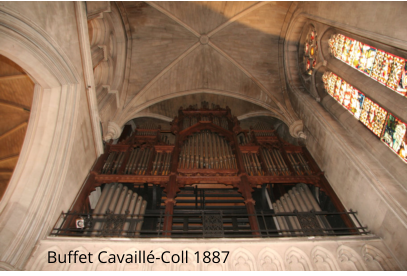
1887 - Aristide Cavaillé-Coll (1)
1922 - Cavaillé-Coll-Pleyel (3A)
1930 - Convers (7)
1970 - Beuchet-Debierre (3a)
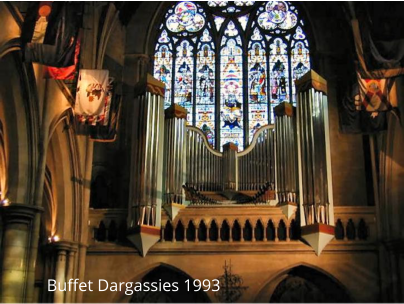
1993 - Dargassies (3a)
IV/72 - transmission électrique
stoplist
2027 - Klais et Thomas (3)
E5
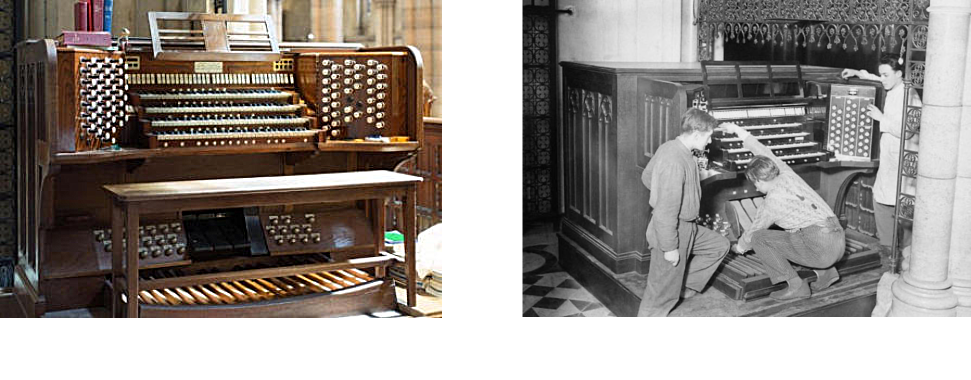
The great organ of the American Cathedral was built by Aristide
Cavaillé-Coll in 1887 and inaugurated on October 5 of the same
year by Alexandre Guilmant. It had 45 stops spread over 3
keyboards (GO, Positive and Swell) and a Pedal. The instrument is
placed on a platform at the crossroads of the nave and the
transept. On the advice of Marcel Dupré, the instrument was
extended (7 new stops) and electrified by Mutin in 1922. Later,
interventions by Convers in 1930, then by Beuchet-Debierre in
1970, took the instrument to 62 stops. That same year, Erwin
Muller built a small organ of neo-classical aesthetics that was
installed on a tribune located at the bottom of the nave and in
the axis of it, near the entrance to the cathedral.
Between 1992 and 1993, Bernard Dargassies restored and
expanded the organ to 72 stops by building a new buffet which
replaced the organ of Muller. This new buffet constituted a 4th
keyboard called "Antiphonal" of 10 stops, which can be played
from the main console of the great organ. The term Antiphonal
refers to a choir organ in the USA. Here, the Antiphonal was not
placed in the choir but on a tribune. In addition, it has an 8'
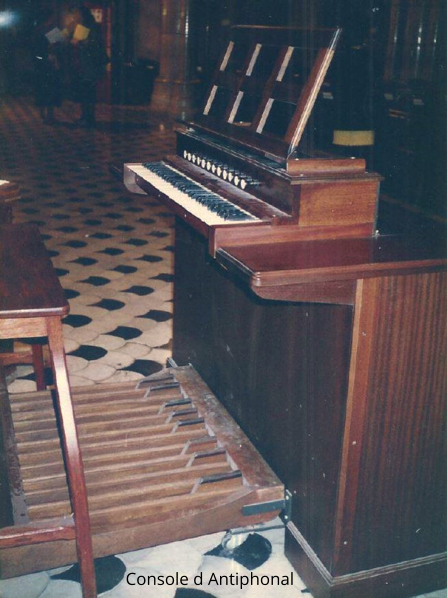
chamade rank. This small buffet of 10 stops constitutes also an
independent organ thanks to a specific console of one keyboard
located under this tribune and allowing to play it separately. It is
therefore possible, at the console of the large organ of 4
keyboards (main console), to play the 3 keyboards and pedals
corresponding to the main buffet as well as the Antiphonal
keyboard placed in the secondary buffet.
(Translation of a French text by Thierry Correard)
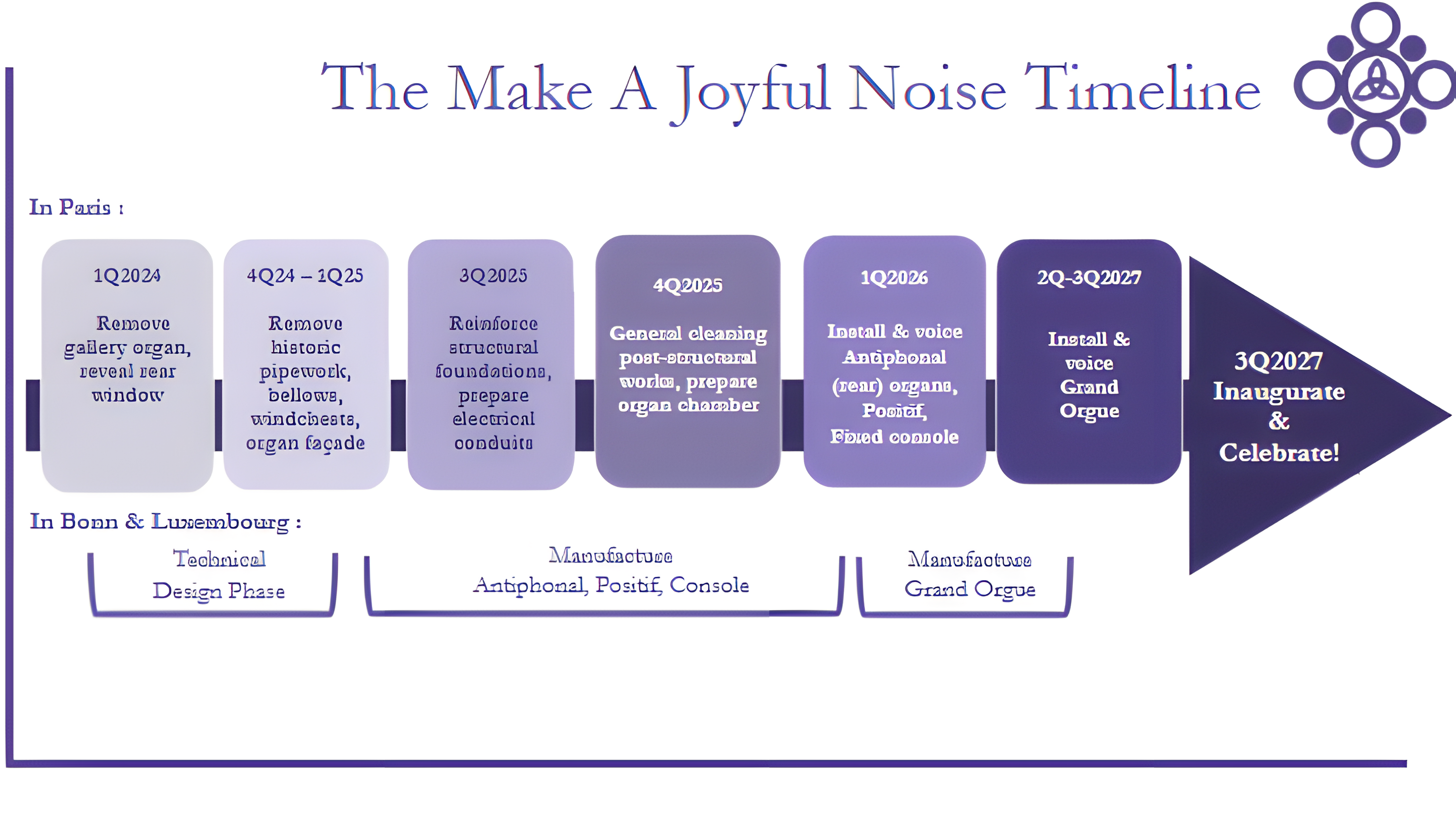
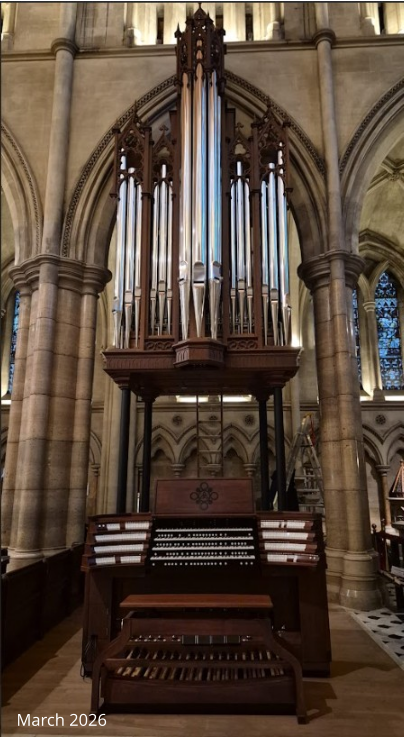
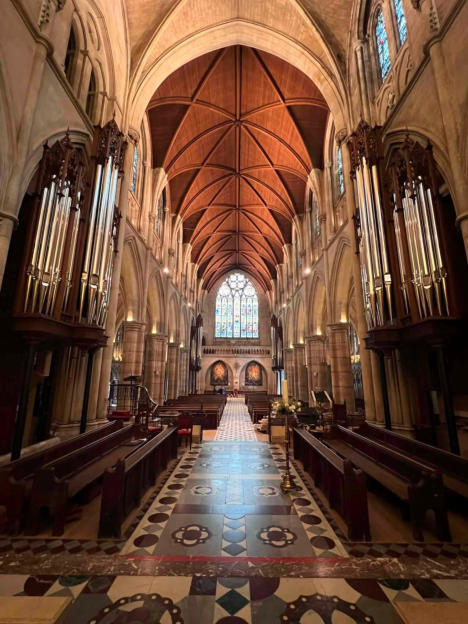
During 2024-2027, this organ will be completely
reconstructed by Klais and Thomas, according to the
schedule below.
All of the surviving Cavaillé-Coll pipework is being restored and
reintegrated into the new organ. The same goes for nearly all of
the 1921/1930 Mutin/Convers/Willis III pipework. New nave
divisions will be the first part of the organ to be delivered.
Two Mutin ranks (zinc) are being discarded:
1.
The G.O. 16’ Diapason which did not mix well with the other
foundations and was anyway incomplete, the bottom octave
was borrowed from the pedal Violone, then seven notes
borrowed from the 8’ Montre, then finally its own pipes from
tenor G! This will be replaced by a complete 16’ Montre rank
which will form the new facades in the chancel.
2.
The Positif 16’ Quintaton had its caps removed and was
revoiced into a not very satisfactory 8’ Flûte in the last
rebuild. This will be replaced by a new 8’ Flûte harmonique,
and a soft 16’ Bourdon. It was decided not to reinstate a
Quintaton as we already have one (1887 CC) in the Récit.
For the facade pipe finish it was decided to go with polished tin
as that is what Cavaillé-Coll did with the existing facade (which
will remain in situ).
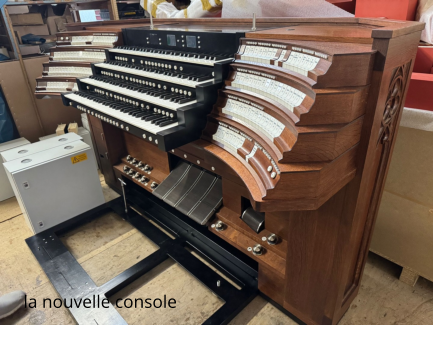
February 2026: Everything (except the Chamade and fixed
chancel drawstop console) for the nave organ, chancel Positif
and G.O. divisions has been built (including restoration of the
historic pipework in the latter two divisions). This phase one of
the project should be finished by July 2026. Everything else will
be delivered starting a year from now as phase 2. Completion
will be sometime in the summer of 2027.
Info: Andrew Dewar, facebook
Site of the organ
Brochure


July 2026


Organs of Paris


ORGANS OF PARIS © 2026 Vincent Hildebrandt
1887 - Aristide Cavaillé-Coll (1)
1922 - Cavaillé-Coll-Pleyel (3A)
1930 - Convers (7)
1970 - Beuchet-Debierre (3a)
1993 - Dargassies (3a)
IV/72 - transmission électrique
stoplist
2027 - Klais et Thomas (3)
E5
The great organ of the American Cathedral was built by
Aristide Cavaillé-Coll in 1887 and inaugurated on October 5 of
the same year by Alexandre Guilmant. It had 45 stops spread
over 3 keyboards (GO, Positive and Swell) and a Pedal. The
instrument is placed on a platform at the crossroads of the
nave and the transept. On the advice of Marcel Dupré, the
instrument was extended (7 new stops) and electrified by
Mutin in 1922. Later, interventions by Convers in 1930, then
by Beuchet-Debierre in 1970, took the instrument to 62
stops. That same year, Erwin Muller built a small organ of
neo-classical aesthetics that was installed on a tribune
located at the bottom of the nave and in the axis of it, near
the entrance to the cathedral.
Between 1992 and 1993, Bernard Dargassies restored and
expanded the organ to 72 stops by building a new buffet
which replaced the organ of Muller. This new buffet
constituted a 4th keyboard called "Antiphonal" of 10 stops,
which can be played from the main console of the great
organ. The term Antiphonal refers to a choir organ in the
USA. Here, the Antiphonal was not placed in the choir but on
a tribune. In addition, it has an 8' chamade rank. This small
buffet of 10 stops constitutes also an independent organ
thanks to a specific console of one keyboard located under
this tribune and allowing to play it separately. It is therefore
possible, at the console of the large organ of 4 keyboards
(main console), to play the 3 keyboards and pedals
corresponding to the main buffet as well as the Antiphonal
keyboard placed in the secondary buffet.
(Translation of a French text by Thierry Correard)
During 2024-2027, this organ will be completely
reconstructed by Klais and Thomas, according to the
schedule below.
All of the surviving Cavaillé-Coll pipework is being restored
and reintegrated into the new organ. The same goes for
nearly all of the 1921/1930 Mutin/Convers/Willis III pipework.
New nave divisions will be the first part of the organ to be
delivered.
Two Mutin ranks (zinc) are being discarded:
1.
The G.O. 16’ Diapason which did not mix well with the
other foundations and was anyway incomplete, the
bottom octave was borrowed from the pedal Violone,
then seven notes borrowed from the 8’ Montre, then
finally its own pipes from tenor G! This will be replaced by
a complete 16’ Montre rank which will form the new
facades in the chancel.
2.
The Positif 16’ Quintaton had its caps removed and was
revoiced into a not very satisfactory 8’ Flûte in the last
rebuild. This will be replaced by a new 8’ Flûte
harmonique, and a soft 16’ Bourdon. It was decided not
to reinstate a Quintaton as we already have one (1887
CC) in the Récit.
For the facade pipe finish it was decided to go with polished
tin as that is what Cavaillé-Coll did with the existing facade
(which will remain in situ).
February 2026: Everything (except the Chamade and fixed
chancel drawstop console) for the nave organ, chancel Positif
and G.O. divisions has been built (including restoration of the
historic pipework in the latter two divisions). This phase one
of the project should be finished by July 2026. Everything else
will be delivered starting a year from now as phase 2.
Completion will be sometime in the summer of 2027.
Info: Andrew Dewar, facebook
Site of the organ
Brochure

July 2026